
Carob Granola Clusters
Lightening & Energizing
Qualities
Warming | Drying | Building
Time & Season
Occasionally
Autumn – Winter
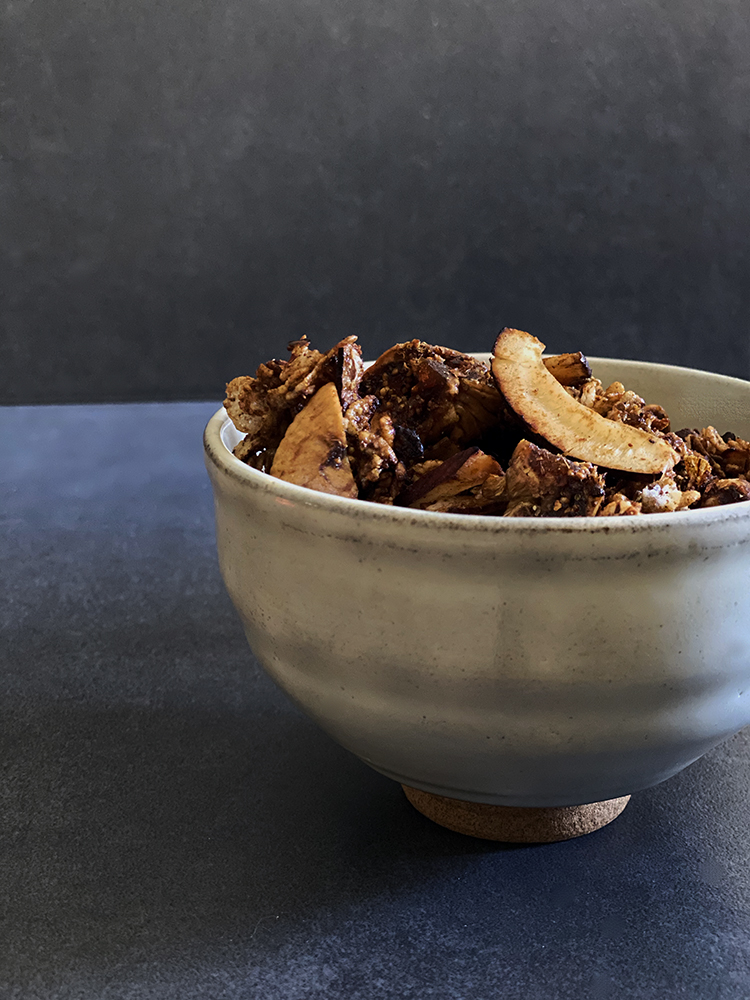
Carob is a sweet and astringent bean, native to the Eastern-Mediterranean region. Traditionally, it is used mainly to make carob molasses in Middle-Eastern countries. The dark syrupy liquid is then enjoyed in various ways, including puddings, beverages, as a dip mixed with tahini, or as medicine for treating coughs, cold-sores, diarrhea and more. Carob is rich in minerals like potassium, calcium, iron and phosphorous.
Serves 3-4
Ingredients:
2 cups of plain organic puffed rice
2 tbsp almonds, crushed
2 tbsp hazelnuts, crushed
2 tbsp coconut shavings
2 dates or dried figs, chopped
1 tbsp cacao nibs (optional)
1 tbsp ghee
2 tbsp carob molasses
1/2 tsp cardamom powder
1/2 tsp ginger powder
1 tsp cinnamon powder
A pinch of pink Himalayan salt
1 tbsp of orange zest
Preparation Method:
– In a large pan, place the nuts and coconut, and dry roast them on medium heat, stirring occasionally until they start smelling toasty and turn golden
– Add the ghee, spices, salt and puffed rice. Stir everything well
– Drizzle the carob molasses while continuously stirring. The carob should coat every piece of rice
– Now add the dates or dried figs, along with the orange zest and cacao nibs. Give everything a good mix
– Turn off the heat, and let the granola cool off in the pan completely without disturbing it. The molasses will dry out and bring everything together
– After the granola cools down, gently break it into bite size clusters using your hands
– Store it in a glass jar container and enjoy a handful over some plain organic yogurt, or eat it like cereal with almond milk
Notes:
– Vata individuals should eat it with milk so that it doesn’t cause too much dryness in their system
– Pitta individuals can substitute carob molasses for maple syrup, and leave the dry ginger powder out
– Kapha individuals can enjoy it in moderation, on its own or with some rice milk